Foods That Never Expire: What Really Lasts Decades in Storage
Which foods that never expire really do? Honey, sugar and white rice come close. Realistic shelf lives, storage methods and the foods that only claim it.
BLUF Bottom line up front
Almost no food truly lasts forever, but a few come close. Honey, sugar and syrups keep indefinitely if sealed and kept dry. White rice, dried beans, oats and plain pasta stay edible for 25 to 30 years when packed without oxygen and stored cool. Quality fades before safety does.
- Sugar and honey keep indefinitely because microbes cannot grow in them.
- White rice can last 25 to 30 years sealed and cool; brown rice goes rancid in months.
- Heat is the biggest enemy. Cool, dark and dry matters more than the container.
- These foods are calories, not a full diet. Add vitamins, fats and variety.
- A best-by date is about quality, not a safety cliff.
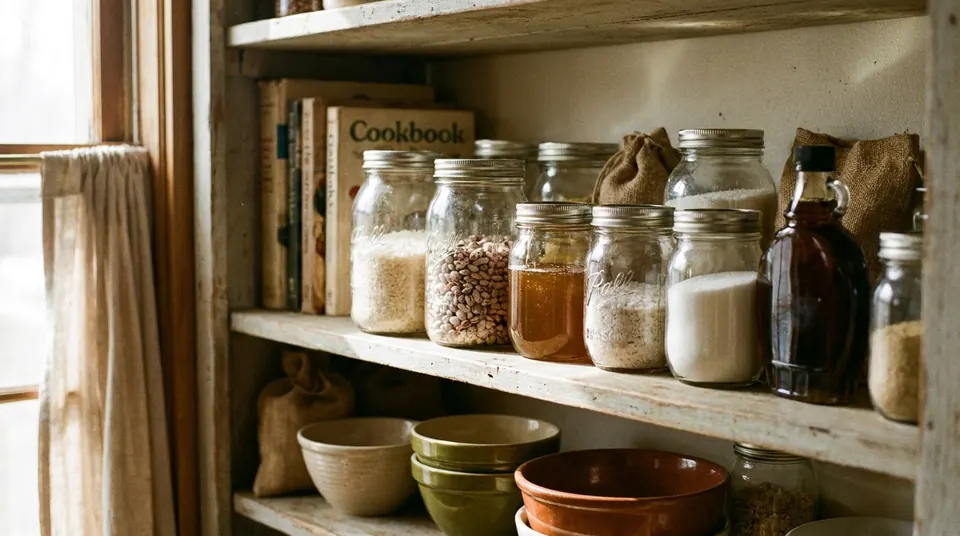
Nothing in your kitchen lasts forever. But a short list of foods comes close enough that you can buy them once and stop worrying. Honey, sugar and white rice sit at the top. Dried beans, oats and plain pasta follow.
The honest version of “foods that never expire” is this: sealed, dry and kept cool, these foods stay safe for decades. What fades is flavor, texture and some nutrients. That is a quality problem, not a safety one, and for an emergency pantry it is a trade you can live with.
This page covers what actually lasts, how long, how to store it, and which “forever foods” are not.
Foods that never expire: the short list
| Food | Realistic shelf life | Best storage |
|---|---|---|
| Honey (pure, filtered) | Indefinite for safety; quality holds for years | Sealed jar or bucket, room temperature, keep moisture out |
| Granulated sugar | Indefinite | Airtight container, dry |
| White rice | 25 to 30 years sealed and cool; up to 10 years at 70°F (21°C) with oxygen absorbers | Mylar bag or sealed bucket with oxygen absorber |
| Dried beans | Up to 30 years acceptable in research; 1 to 2 years is the retail rule of thumb for easy cooking | Sealed, cool, dry |
| Rolled oats | Up to 30 years acceptable in BYU testing | Sealed, oxygen removed |
| Plain dry pasta (no egg) | Up to 30 years acceptable in BYU testing; about 2 years is the pantry rule | Sealed, cool, dry |
| Salt (plain) | Rule of thumb: indefinite if dry; iodized salt is often quoted at about 5 years | Airtight, dry |
| Pure maple syrup | Years unopened; refrigerate after opening | Cool; fridge once opened |
| White vinegar | Years; quality declines slowly | Sealed, away from heat |
| Pure vanilla extract | Years (rule of thumb; high alcohol content) | Dark, cool, capped |
| Powdered milk | 1 to 5 years, depending on the type and source | Sealed, cool |
The research-based 30-year figures come from BYU food storage work, mostly sensory testing of foods packed with oxygen removed. Treat them as best case. Your garage in July is not a lab.
The ones worth your money
Honey and sugar
Utah State University Extension’s food storage booklet lists commercial sugars, syrups and honey as storable indefinitely, because mold and other microbes do not readily grow in them. Filtered liquid honey keeps best. Syrups are a step behind granulated sugar. Some may taste off after 2 to 10 years.
Honey crystallizes. That is normal, not spoilage. Warm the jar gently in hot water and stir.
The real risk is moisture. Wet honey can ferment. Keep the lid tight and never dip a wet spoon.
White rice
This is the star. Utah State says polished white rice stores well for 25 to 30 years when properly sealed and kept cool, and BYU’s rice study found nutrients and flavor held up for up to 30 years. At a steady 70°F (21°C) with oxygen absorbers, the same page says up to 10 years. Ideal storage is 40°F (4°C) or below, which most of us cannot offer.
Practical takeaway: store it sealed, store it as cool as your house allows, and expect more like 10 to 20 years than 30 in a normal home.
Beans, oats and plain pasta
BYU tests rated beans, oats and macaroni acceptable for up to 30 years when packaged to remove oxygen and held at room temperature or cooler. Old dry beans do not turn dangerous. They just take longer to cook, sometimes much longer. Soak overnight and plan on extra fuel.
Plain pasta has no moisture and almost no fat, so it ages slowly. Egg pasta does not last as long.
Salt, vinegar and vanilla
Plain salt is a mineral. It does not spoil, though it clumps if damp. Iodized salt can lose iodine over time, which is a nutrition detail, not a safety one.
Distilled white vinegar and pure vanilla extract are both preserved by their own chemistry (acid and alcohol). They are cheap, take little shelf space and hold up for years. Imitation vanilla does not last as long as the real thing.
Foods that sound immortal but are not
Myth: “Brown rice is healthier, so store that.” Brown rice keeps its oily bran and germ, and those oils go rancid. A common rule of thumb is about 6 months at room temperature, longer in the fridge or freezer. It is a fine food to rotate. It is a bad food to bury.
- Whole wheat flour and whole grains with the germ intact. Same oil problem as brown rice.
- Cooking oils and dried eggs. BYU researchers say salad oil and dried eggs should be used within a couple of years.
- Powdered milk. Sources disagree, from 1 year for some nonfat dry milk to several years sealed. Plan on a few years and rotate.
- Instant coffee. Dry, but quality drops. NDSU Extension lists about a year unopened.
- Canned food. Long-lived, but not “forever”. See best canned foods for emergency storage.
How to store it so it actually lasts
Four things kill stored food: heat, moisture, oxygen and light. BYU’s researchers put it plainly: of these, temperature is the most crucial.
- Keep it cool. An interior closet beats a hot garage or attic every time. Every step cooler adds years.
- Keep it dry. Moisture invites mold, insects and, in sealed low-oxygen packs, botulism risk. Church guidance on long-term food storage says oxygen-reduced packaging is for dry foods at about 10% moisture or less.
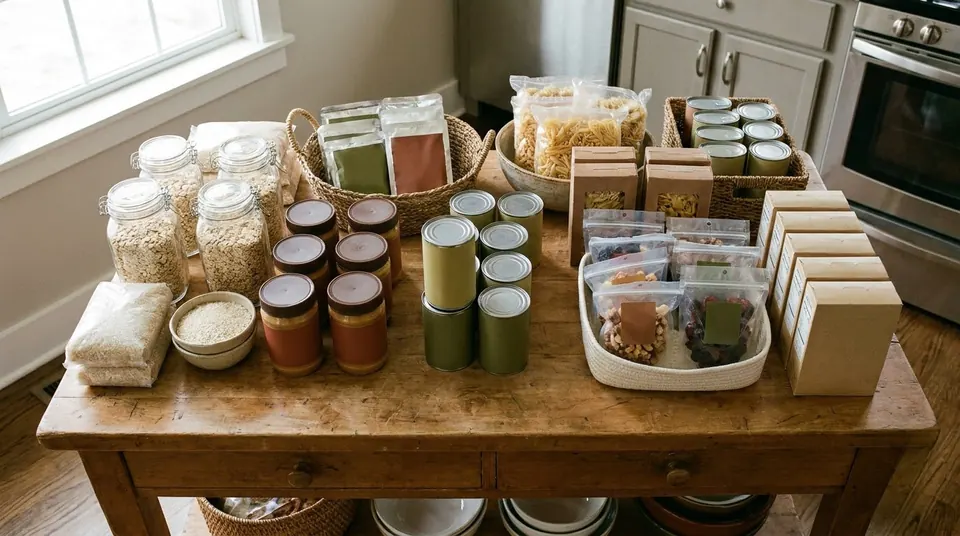
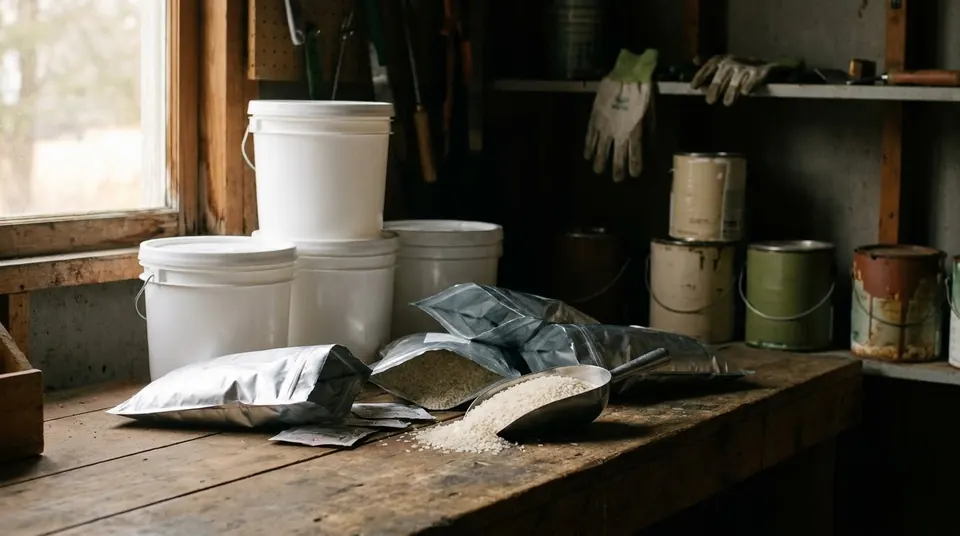
- Remove oxygen for the long haul. Mylar bags with food-safe oxygen absorbers, or sealed food-grade buckets, protect rice, beans and oats from insects and oxidation. Use them only with truly dry foods. Never put sugar-wet, oily or high-moisture items in them.
- Use food-grade containers. A bucket that held paint is not a food bucket.
Label everything with the date you packed it. A permanent marker is the best organizational tool in the pantry.
Best-by dates are not expiration dates
Most “best by” and “use by” dates on dry goods describe quality set by the manufacturer. They are not a safety cutoff for shelf-stable products. Your nose and eyes still matter. Throw out anything with insects, moisture damage, mold or a rancid smell.
The nutrition gap
Here is the catch. Rice, sugar, beans and honey are calories, and some protein. They are not a complete diet. Weeks on rice and beans will leave you short on vitamin C, vitamin A, fats and variety.
Add multivitamins, canned fruit and vegetables, peanut butter and foods you like to eat. Keep the long-life staples as the base and rotate: store what you eat, eat what you store. For a full shopping plan, use the 2-week emergency food supply list, and see what to stockpile for the non-food items.
What to do this weekend
- Check your pantry for white rice, dried beans, oats, sugar and salt. Note what you already have.
- Move them off the hottest shelf. Cool and dark wins.
- Buy one 20 lb bag of white rice and repackage it in mylar or a sealed bucket with an oxygen absorber.
- Add a jar of honey and a bag of sugar.
- Label each container with the date.
- Add a multivitamin and a few cans of fruit and vegetables.
Frequently asked questions
What foods never expire?
Honey, sugar, syrups and plain salt are the closest. They resist microbes, so they stay safe indefinitely if kept dry and sealed. Their flavor or texture can change, but they do not spoil in the usual sense.
What is the longest-lasting survival food?
White rice, stored sealed and cool. Utah State Extension says 25 to 30 years, and BYU found it held its quality for up to 30 years. Honey and sugar last as long or longer, but you cannot live on them.
Does dry rice really last 30 years?
It can, in good conditions. That means oxygen removed and cool storage. At a constant 70°F (21°C) with oxygen absorbers, Utah State says up to 10 years. Brown rice is a different story and goes rancid in months.
Do canned goods last forever?
No. Intact cans stay safe for a long time, but the quality guides are 12 to 18 months for high-acid foods and 2 to 5 years for low-acid foods. Discard any bulging, leaking or badly dented cans.
Is it safe to eat food past its best-by date?
For shelf-stable foods that were stored properly, usually yes. The date reflects peak quality. Check for mold, insects, bad smell or damage, and never taste anything you suspect is spoiled.
Do I need oxygen absorbers?
For storing dry rice, beans or oats beyond a couple of years, they help a lot. They prevent insects and slow oxidation. They are not needed for sugar, honey or salt, and they are only for dry foods.
Sources
- Utah State University Extension: Storing White Rice
- BYU Magazine: Ask an Expert, New Tips for Old Food
- BYU Nutrition, Dietetics and Food Science: Research on Food Storage
- Utah State University Extension: Food Storage for Emergencies booklet
- The Church of Jesus Christ: Longer-Term Food Storage
- NDSU Extension: Food storage shelf life guide (FN579)
- Ready.gov: Food
This guide is general information, not professional, medical or legal advice. Follow instructions from local officials during an emergency. Full disclaimer.