Best Canned Foods for Emergency Storage: What to Buy and Skip
The best canned foods for emergency storage, picked for protein, calories and eat-cold convenience, with shelf lives, can safety rules and what to skip.
BLUF Bottom line up front
The best canned foods for emergency storage are tuna, salmon, chicken, beans, chili, stew, canned fruit, vegetables and peanut butter. Pick foods you will eat cold, with protein and calories. Low-acid cans keep their best quality for about 2 to 5 years, high-acid ones 12 to 18 months.
- Buy proteins and complete meals first, then fruit and vegetables.
- Low-acid canned foods (meat, beans, vegetables) last 2 to 5 years at best quality; high-acid (fruit, tomatoes) 12 to 18 months.
- Discard bulging, leaking, deeply dented or rusted cans. Never taste to test.
- Own two manual can openers. A dead opener makes a pantry useless.
- Buy what you already eat and rotate it.
Canned food is the easiest emergency food there is. No water to add, no stove, no recipe. Ready.gov says to keep non-perishable food that needs no refrigeration, cooking, water or special preparation, and it lists canned meat, fruit and vegetables that can be eaten as they come.
That is a start. But the best canned foods for emergency storage are rarely “whatever was on sale”. Some are far better than others for protein, calories and morale. This page ranks them, gives realistic shelf lives, and covers the safety rules for damaged cans.
How to pick: protein, calories, and eaten cold
Three tests decide what earns shelf space.
- Protein. Meat, fish and beans keep you full and keep muscle on. Fruit and vegetable cans alone will not.
- Calories per can. Check the label. A can of broth has almost none. A can of chili or stew has real energy. Compare calories per dollar, not price per can.
- Edible cold. A power outage may also mean no safe way to heat food. If you can eat it straight from the can, it passes.
Then add the fourth, which matters most: you will eat it. Food nobody likes becomes food nobody eats. Buy what your household already eats, and rotate it. More on that in prepping for beginners.
The best canned foods, ranked
| Food | Why it earns a spot | Approx. best-quality shelf life | Eat cold? |
|---|---|---|---|
| Tuna and salmon | High protein, small cans, no prep | 2 to 5 years (low-acid) | Yes |
| Canned chicken | Protein, mixes into anything | 2 to 5 years | Yes |
| Chili and stew | Complete meal, good calories | 2 to 5 years | Edible cold, better warm |
| Beans (black, pinto, kidney, chickpeas) | Fiber, protein, cheap | 2 to 5 years | Yes, rinse first |
| Spam-style canned meat | Dense calories, fat | 2 to 5 years | Yes |
| Canned vegetables (corn, green beans, carrots) | Vitamins, variety | 2 to 5 years | Yes |
| Canned fruit (peaches, pears, pineapple) | Sugar, morale, vitamin C | 12 to 18 months (high-acid) | Yes |
| Tomatoes and tomato sauce | Cooking base | 12 to 18 months (high-acid) | Not great cold |
| Soup (hearty types) | Hydration and calories | 2 to 5 years | Edible cold |
| Coconut milk | Fat, calories | Check the label; low-acid rule applies | Yes in recipes |
| Peanut butter (jar) | Calories and protein, not canned but a staple | Check the label | Yes |
The 12 to 18 month and 2 to 5 year figures are the commonly quoted USDA guidance for quality. Cans that are still intact usually stay safe far longer, but color, texture and flavor drift.
Proteins first
Tuna and salmon. Cheap, compact and widely available. Buy in water for lower calories or in oil for more energy. Pouches are fine too, but cans last longer.
Chicken and canned meat. Chicken is bland. Fine. Add hot sauce. Canned ham-style meats can be higher in fat, which helps in cold weather. Check labels. Some canned ham and seafood is not shelf-stable and says “Keep Refrigerated”.
Beans and chili. Beans are the best calories per dollar in the store. Chili gives you a full meal in a can. Rinse beans if sodium is a concern, but only if you have clean water to spare.
Vegetables, fruit and complete meals
Vegetables are not exciting, but they keep you from living on tuna and crackers. Pick the ones you will actually finish: corn, green beans, carrots, potatoes, peas.
Canned fruit is the best morale food in the pantry. High-acid foods have the shortest shelf life, so use fruit on a rotation, not a ten-year plan.
Stews, hearty soups, ravioli and pasta in sauce are complete meals. They cost more per calorie than plain beans, and they win on convenience.
Fats and treats
Calories are the problem in a long outage, not just protein. Peanut butter, nuts and coconut milk help. So do crackers, instant coffee or tea, hard candy and chocolate in cool storage. The treats matter more than the survivalists admit. Nobody keeps a calm household on tuna alone.
Shelf life: what the numbers mean
The standard guidance is:
- High-acid foods (fruit, tomatoes, pickles, juices): best quality for about 12 to 18 months.
- Low-acid foods (meat, fish, beans, most vegetables): best quality for about 2 to 5 years.
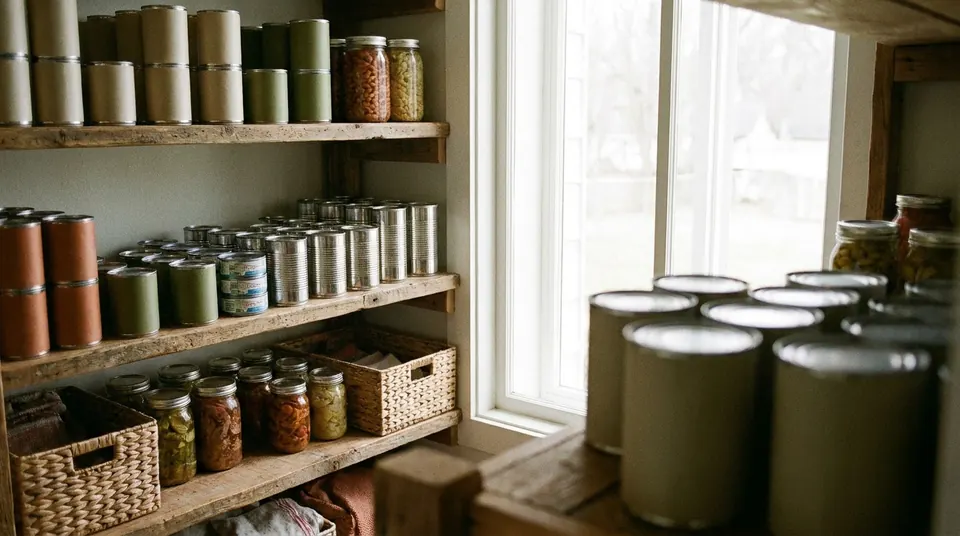
These are quality windows, not safety deadlines. Storage matters more than the date. USDA says to keep cans in a cool, dry place, and never above or beside the stove, under the sink, or in a damp garage or basement. Heat shortens life.
Not sure how old a can is? Write the purchase date on top in marker. Rotate older cans to the front.
Can safety: when to throw it out
Botulism is rare in commercial cans, but it is serious, so the rules are strict.
Safety: Discard any can that is bulging, leaking, spraying liquid when opened, or has deep dents on the seams, heavy rust or a foul smell. CDC says you cannot see, smell or taste the botulism toxin, and even a small taste can be deadly. Do not taste to check.
- Shallow dents on the can body are generally fine. Dents on the rim or seam are not.
- If you suspect a can, do not open it. Wear gloves and put it in a sealed bag in the trash, away from pets and kids.
- Once opened, move leftovers to a covered container and refrigerate if you can. Without power, plan to eat the whole can.
- Home-canned food is a different risk category. CDC says it is the most common source of botulism in the US, so it is not part of this plan.
Tools you need
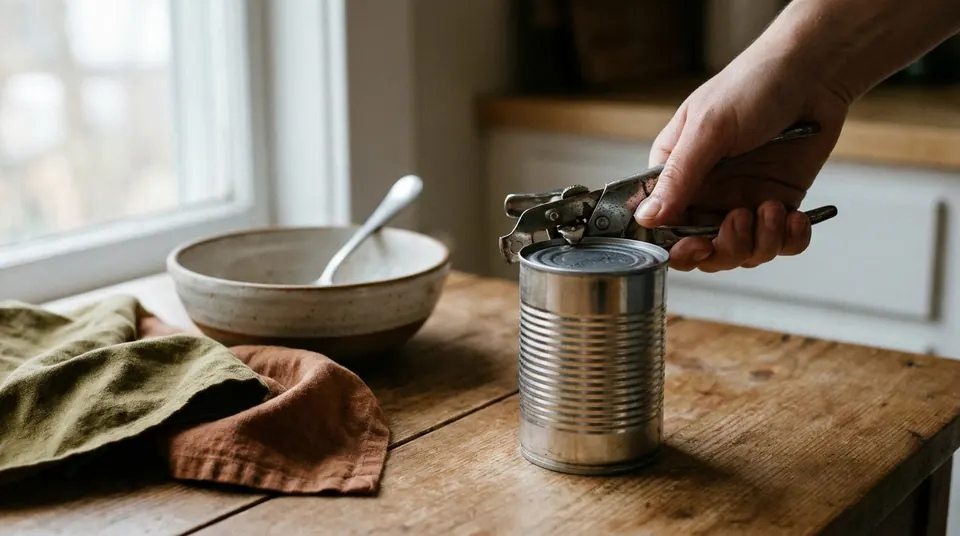
- Two manual can openers. One will break. The Ready.gov kit list includes a manual can opener for a reason.
- A spoon or two, a small camp stove if you want hot food (outdoors only), and a lighter.
- A marker for dating cans.
For cooking and safe heat sources, see power outage checklist.
How much to buy
Do not guess. Use the numbers. A 2,000 calorie day (the standard FDA reference, not a personal need) is about:
- 1 can of protein (tuna, chicken, or chili)
- 2 cans of beans or vegetables
- 1 can of fruit
- Peanut butter, crackers, snacks
Scale that by people and days. The emergency supply calculator does the math, and the 2-week emergency food supply list turns it into a shopping list. For foods that last much longer than cans, see foods that never expire. For what the dates mean and when to toss a can, read how long canned food lasts.
If the power is out, your fridge food goes first, then your freezer food, then your cans. See how long food lasts in the fridge without power.
What to do this weekend
- Buy 6 cans of protein you already like (tuna, chicken, chili).
- Buy 6 cans of beans or vegetables and 3 cans of fruit.
- Buy two manual can openers and put them in different places.
- Date every can with a marker.
- Move all canned food to an interior closet, away from heat and damp.
Frequently asked questions
What are the best canned foods to stockpile?
Start with protein: tuna, salmon, chicken, chili and beans. Add vegetables, canned fruit and a few complete meals like stew. Choose things you will eat cold, and with calories you can count. Buy what your family already likes.
How long do canned foods last?
USDA guidance gives about 12 to 18 months of best quality for high-acid foods like fruit and tomatoes, and 2 to 5 years for low-acid foods like meat and vegetables. Intact cans often stay safe longer, but quality declines.
Is it safe to eat canned food past the date?
Usually, if the can is intact and stored cool and dry. The date is about quality. Discard bulging, leaking, rusted or deeply dented cans, and never taste questionable food.
Can you eat canned food cold?
Yes. Commercially canned food is cooked in the can and safe to eat as is. Tuna, beans, fruit and vegetables are fine cold. Stews and chili are better warm but not required.
What canned foods should you not stockpile?
Skip anything high in sodium that you will not eat, plain broth for calories, and cans marked “Keep Refrigerated”. Also skip fancy items nobody likes. Do not store cans in heat, near the stove, or in a damp garage.
How many cans do I need per person?
Rule of thumb: 3 to 5 cans plus snacks per person per day for about 2,000 calories. That number swings with can size and calorie content, so read labels or use the supply calculator.
Sources
This guide is general information, not professional, medical or legal advice. Follow instructions from local officials during an emergency. Full disclaimer.