Winter Car Emergency Kit: What to Pack and What to Do If Stranded
A winter car emergency kit checklist, plus exactly what to do if you are stuck in snow: stay put, clear the exhaust, run the engine 10 minutes an hour.
BLUF Bottom line up front
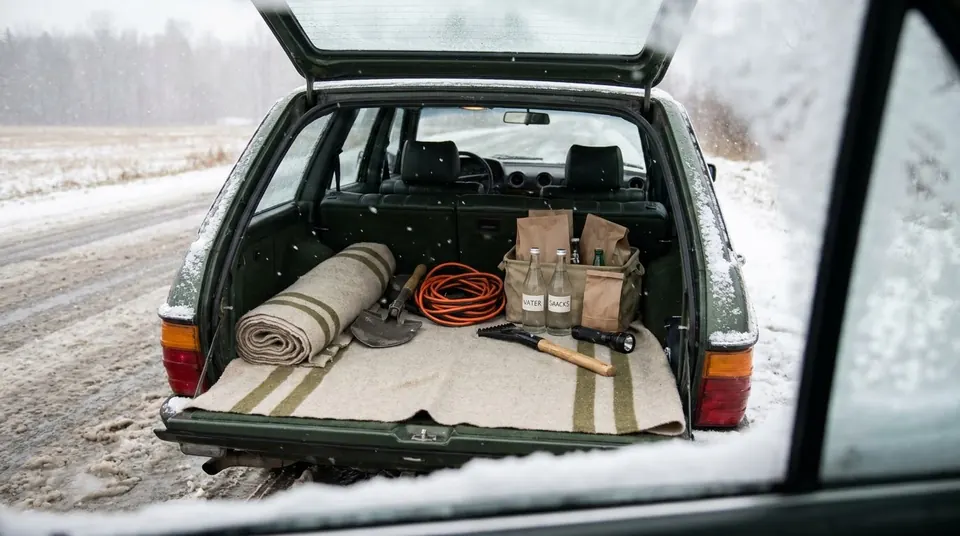
Pack warm layers, blankets or a sleeping bag, water, snacks, a flashlight, a phone charger, jumper cables, a shovel and sand for traction. If stranded, stay in the car, clear snow from the exhaust pipe, run the engine about 10 minutes an hour with a window cracked, and make the car visible.
- If you are stuck, stay in the vehicle. People get lost in blowing snow.
- Run the engine and heater about 10 minutes per hour with one window slightly open, and keep the exhaust pipe clear of snow.
- Make the car visible: bright cloth on the antenna, dome light on at night while the engine runs, hood up once snow stops.
- Keep the gas tank full in winter. A full tank is your heater.
- Do not eat snow. It lowers your body temperature.
A winter car emergency kit is a bag of boring things that you hope to carry around forever without using. The day you need it, it is the difference between an annoying wait and a long, cold, dangerous night.
Below: the checklist first, then what to do if you actually get stuck. If you are stuck right now, jump to what to do if you are stranded in a car in snow.
Winter car emergency kit checklist
Ready.gov’s winter car kit is short: jumper cables, sand, a flashlight, warm clothes, blankets, bottled water and non-perishable snacks, plus a full fuel tank. AAA chapters add items like traction aids and a shovel. Here is the version we would build.
Print this and tick it off in your driveway.
Stay warm (the part that matters most)
- A wool or synthetic blanket per person, or a sleeping bag
- Warm coat, hat, gloves or mittens, wool socks (the CDC notes wool, silk or polypropylene hold more body heat than cotton)
- Chemical hand warmers (rule of thumb: cheap and light)
- Spare dry socks in a zip bag
Water and food
- Bottled water (it can freeze in a cold trunk, so keep a bottle in the cabin)
- Non-perishable snacks: nuts, bars, crackers, peanut butter
- For kids or pets, whatever they need for a day
Get unstuck
- Sand, and non-clumping cat litter or traction mats as AAA lists traction aids
- A small shovel
- Ice scraper and snow brush
- Jumper cables
- Tow strap (rule of thumb: only useful if someone is there to pull)
Be seen and be reached
- Flashlight with spare batteries (or a headlamp)
- Bright cloth, preferably red, for the antenna or door. The National Weather Service recommends it
- Reflective triangles or flares
- A phone with a full charge and a car charger. NWS lists a charged phone and charger as part of leaving home prepared
- A power bank, because the car battery is the thing most likely to fail
- A paper list of emergency contacts
Safety and basics
- First aid kit
- Any medicine you need for a day or two
- Multi-tool or basic tools
- Fix-a-flat and a working spare tire
- Cash
In the car, not in the trunk
- A full tank of gas. Ready.gov says to keep your fuel tank full. A rule of thumb: refuel at half
- Phone charger in the cabin
- Blanket where you can reach it if the trunk is blocked by snow or a crash
A pre-made kit is fine as a base. Check what is actually in it, then add warmth and a way to charge your phone.
Before you drive
Most of this kit is useless if you should not have left home at all. Ready.gov says to stay off roads if possible. Check forecasts, tell someone your route and arrival time, and go early rather than late.
Ready.gov also says that if you are trapped in your car, you should stay inside. That one line is the whole game.
What to do if you are stranded in a car in snow
The first minutes
- Stay in the vehicle. The NWS says to stay in the vehicle because you can get disoriented quickly in wind-driven snow and cold. Walking away from a car is how people get lost.
- Call 911 or your roadside service. If you have signal, tell them your location and your fuel level.
- Turn on hazard lights.
- Check the exhaust pipe. Make sure it is not blocked by snow.
Heat without poisoning yourself
This is the part most people get wrong.
The CDC says to run the motor (and heater) for about 10 minutes per hour, opening one window slightly to let in air, and to make sure snow is not blocking the exhaust pipe, which reduces the risk of carbon monoxide poisoning. The National Weather Service gives the same 10 minutes an hour, with a cracked window and a clear exhaust.
Safety: A tailpipe packed with snow can push carbon monoxide into the cabin. CO has no smell. Clear the exhaust, crack a window, and check the pipe again after more snow falls. Never run the engine in a garage.
Between engine runs, turn the engine off and wrap up. Do not leave it idling all night.
Get found
The National Weather Service says to:
- Tie a bright cloth, preferably red, to the antenna or door.
- Turn on the dome light at night while the engine is running.
- Raise the hood once snow stops falling.
Keep your body going
Following CDC advice for stranded drivers:
- Stay awake. You are less vulnerable to cold-related health problems.
- Keep moving your arms and legs. Stay as dry as you can.
- Do not eat snow. It lowers your body temperature.
- Watch for hypothermia. CDC lists shivering, extreme tiredness, confusion, clumsy hands, memory loss, slurred speech and drowsiness. A body temperature under 95°F is an emergency. Read how to stay warm without power for more body-warming methods that work in a car too.
- Avoid heavy shoveling. CDC notes that cold puts extra strain on the heart, and that you should not overdo it.
Huddle if you have passengers. Share the blankets. Put the kids in the middle.
A real example: I-95 in Virginia, January 2022
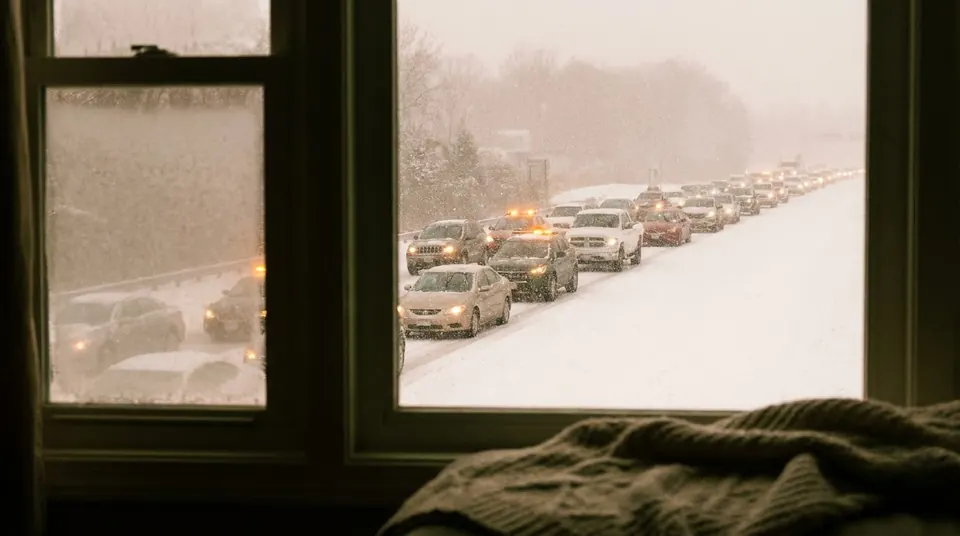
On January 3, 2022, a snowstorm and a jackknifed tractor-trailer left motorists stuck on about 50 miles of I-95 in Virginia. According to PBS NewsHour, some were stranded since Monday morning, more than 24 hours by Tuesday. Reports of the stretch’s length vary from roughly 40 to 55 miles.
Nobody planned to spend a night on a highway. The lesson is not “avoid I-95.” It is that a closed highway can last far longer than a tank of gas at idle, and that the kit and the 10-minutes-an-hour rule are there for exactly this.
Common mistakes
- Leaving the car to walk for help. Unless you can see a building or help close by, stay put. OSHA guidance, as reprinted by a safety supplier, puts the cutoff at 100 yards. We could not verify that number against OSHA directly, so treat it as a rule of thumb.
- Idling all night with a blocked tailpipe. CO.
- Running on a near-empty tank. The kit assumes you can heat in short bursts.
- Cotton clothing. It holds moisture.
- Skipping the phone charger. A dead phone is a dead lifeline.
- Drinking alcohol to warm up. The CDC says alcohol makes the body lose heat faster.
What to do this weekend
- Walk out to your car and pack the checklist above. It takes about an hour if you already own blankets and a flashlight.
- Put a blanket and spare gloves in each family car.
- Set a rule: refuel at half a tank from November to March.
- Learn where your exhaust pipe is.
- At home, work through the power outage checklist. The two lists overlap.
- If you are just starting out, prepping for beginners puts a car kit in context.
- For the rest of your fall to-do list, see what old-timers stock up on before winter.
Frequently asked questions
What should be in a winter car emergency kit?
At minimum: warm clothes, blankets or a sleeping bag, water, non-perishable snacks, a flashlight, jumper cables, sand for traction and a full tank of gas, as Ready.gov lists. Add a phone charger or power bank, a shovel, an ice scraper, a bright cloth for signaling and a first aid kit.
How long can you run your car for heat when stranded?
Both the CDC and the National Weather Service say to run the engine and heater about 10 minutes each hour. Crack a window slightly and make sure snow is not blocking the exhaust pipe. Idling continuously raises carbon monoxide risk and burns through fuel.
Should you stay in your car in a snowstorm?
Yes, in most cases. The NWS says to stay in the vehicle, because you can become disoriented quickly in wind-driven snow and cold. A car is shelter, and a stopped car is easier for rescuers to find than a person on foot.
How do you stay warm in a car without heat?
Wear layers and a hat, wrap in blankets or a sleeping bag, and keep your feet dry. Stay awake and move your arms and legs. Huddle with passengers. Do not eat snow. Run the engine for heat about 10 minutes an hour with a window cracked and a clear exhaust.
How much gas should you keep in the car in winter?
Ready.gov says to keep the fuel tank full. Many drivers use a half-tank rule of thumb in winter. It is a habit, not an official number, but it leaves you fuel for short engine runs if you get stuck.
Sources
This guide is general information, not professional, medical or legal advice. Follow instructions from local officials during an emergency. Full disclaimer.