How to Make Water Safe to Drink: Boiling, Bleach and Filters
How to make water safe to drink in an emergency: exact boiling times, a bleach drops-per-gallon table from EPA and CDC, filters, and what none of it removes.
BLUF Bottom line up front
Boiling is the most reliable method: bring clear water to a rolling boil for 1 minute, or 3 minutes at high elevation. If you cannot boil, add 8 drops of plain unscented bleach per gallon, stir, and wait 30 minutes. Neither method removes chemicals or fuel.
- Boil clear water at a rolling boil for 1 minute (CDC: 3 minutes above 6,500 ft; EPA: above 5,000 ft).
- Plain unscented bleach: 8 drops per gallon, double it if the water is cloudy or very cold, wait 30 minutes.
- Most portable filters do not remove viruses. Follow a filter with a disinfectant.
- Boiling and bleach do not remove fuel, heavy metals or other chemicals.
- Filter cloudy water through cloth or a coffee filter first. Dirty water beats most treatments.
To make water safe to drink in an emergency, boil it. Bring clear water to a rolling boil and keep it there for 1 minute. At high elevation, boil for 3 minutes. That is the standard from CDC and EPA, and it kills bacteria, viruses and parasites.
No stove or fuel? Unscented household bleach does the job with a dropper and a half-hour wait. Filters help too, but with a catch most people miss.
This page covers all of it, with the exact dosing numbers copied from the agencies. It also covers the ones that do not work, because the failures are what hurt people.
How to make water safe to drink: step zero is looking at it
Before you treat anything, check what it looks like.
If it is cloudy or has bits in it, let it settle, then pour the clear water off the top through a clean cloth, paper towel or coffee filter. EPA says disinfection works less well in cloudy or colored water. CDC makes the same point and adds that cloudy water blocks UV light and sunlight, so it undermines those methods too.
If it smells of fuel or chemicals, or has a sheen on it, stop. See the section on what treatment cannot fix.
Method 1: boiling
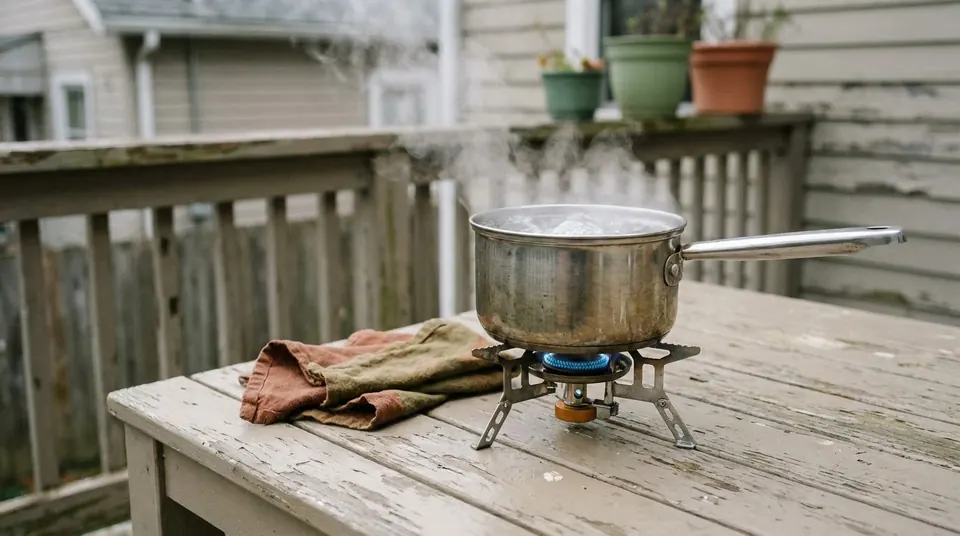
Boiling is the best method when you have a heat source and a pot. CDC calls it the best way to kill germs in water, and EPA says it is sufficient to kill bacteria, viruses and protozoa.
- Filter or settle cloudy water first.
- Bring the water to a rolling boil.
- Keep it boiling for 1 minute.
- At high elevation, boil for 3 minutes.
- Let it cool naturally and store it in clean, covered containers.
The elevation cutoff differs by agency. CDC says above 6,500 feet (about 2,000 m). EPA says above 5,000 feet (1,000 m). If you are anywhere near that range, take the cautious number and boil 3 minutes. It costs you two extra minutes of fuel.
A rolling boil means big bubbles breaking the surface constantly, not a few bubbles forming on the bottom. Flat boiled water tastes dull. CDC suggests pouring it back and forth between clean containers, letting it stand a few hours, or adding a pinch of salt per quart or liter.
Note: Under a boil water advisory (see what to do when the water is shut off or a boil notice is issued), local authorities set the rules. Some may give a longer boil time or tell you to use bottled water. Follow what they say. The numbers above are the CDC and EPA standard.
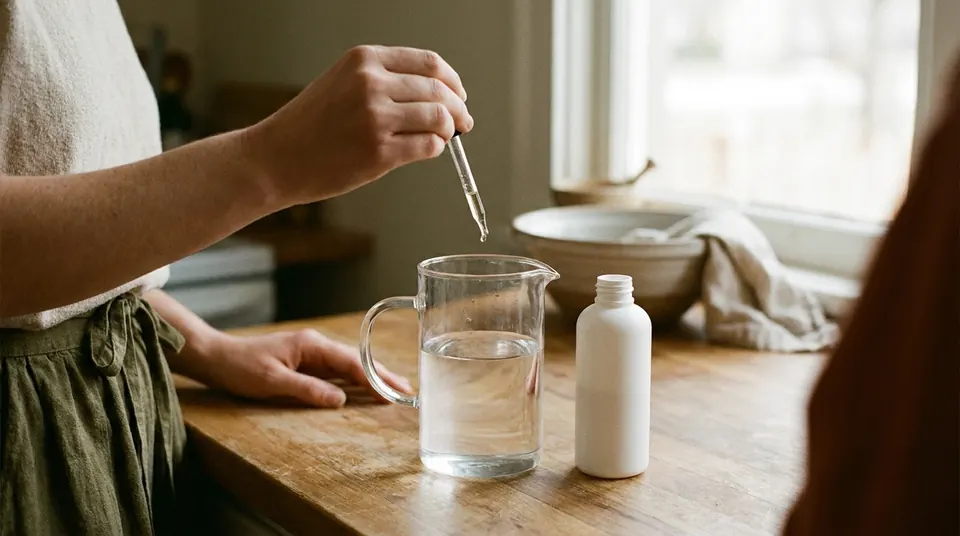
Method 2: unscented bleach
Bleach works when you cannot boil. It must be the right bleach. EPA says to use only regular, unscented chlorine bleach suitable for disinfection and sanitization, and not scented, color-safe, or bleaches with added cleaners.
Check the label for the strength. EPA lists 6% and 8.25% sodium hypochlorite. CDC’s table covers products that are “typically between 5% and 9%” in the United States.
Bleach dosing table (EPA)
| Water volume | 6% bleach | 8.25% bleach |
|---|---|---|
| 1 quart / 1 liter | 2 drops | 2 drops |
| 1 gallon | 8 drops | 6 drops |
| 2 gallons | 16 drops (1/4 tsp) | 12 drops (1/8 tsp) |
| 4 gallons | 1/3 tsp | 1/4 tsp |
| 8 gallons | 2/3 tsp | 1/2 tsp |
Bleach dosing table (CDC, 5-9% bleach)
| Water volume | Dose |
|---|---|
| 1 quart / 1 liter | 2 drops, or a tiny amount too small to measure |
| 1 gallon | 8 drops, or just under 1/8 teaspoon |
| 5 gallons | 40 drops, or 1/2 teaspoon |
Then:
- Stir well.
- Wait 30 minutes before drinking. EPA says to stir and let stand for 30 minutes.
- Smell it. The water should have a slight chlorine odor. If not, EPA says to repeat the dose and let it stand another 15 minutes before use.
- Double the dose if the water is cloudy, colored, murky or very cold. Both EPA and CDC say this.
Ready.gov uses a slightly different form for plain bleach at 5.25% to 6%: 1/8 teaspoon per gallon, same 30-minute wait, same smell test. It also says that if the chlorine smell is still missing after a second dose, throw the water out.
Stick to a dropper or the 1/8 teaspoon measure. Guessing with a cap is how people end up with too much or too little.
Bleach goes stale
EPA’s guidance assumes bleach stored at room temperature for less than one year. Older bottles lose strength. If yours is old, treat it as weaker than the label says, or buy a fresh bottle. This is one for the shopping list in what to stockpile.
Method 3: filters
A filter removes some things. It does not make water safe on its own, and many people do not know that.
CDC says portable water filters do not remove all types of germs, and that filters do not remove viruses. The pore size matters:
- Bacteria: absolute pore size of 0.3 micron or smaller.
- Parasites such as Giardia and Cryptosporidium: 1 micron or smaller.
After filtering, CDC says to add a chemical disinfectant such as chlorine, iodine or chlorine dioxide to deal with any remaining viruses and bacteria. Check the filter’s label. “Removes 99.99% of bacteria and protozoa” and “removes viruses” are different claims.
Our view: a filter is a good first step for cloudy water and a nice add-on if you live somewhere with runoff, but for a home emergency kit, a pot and a bottle of bleach cover more risks per dollar.
Method 4: chlorine dioxide tablets and iodine
Tablets are small, light and cheap, and they sit in a kit for years. Follow the instructions on the package exactly, because they are made for specific volumes of water.
CDC points out the difference that matters: chlorine dioxide tablets kill Cryptosporidium when used according to directions. Iodine and chlorine tablets kill most germs but not Cryptosporidium. CDC also warns that people who are pregnant, have thyroid problems or are sensitive to iodine should avoid iodine-treated water, and that nobody should drink iodine-treated water for more than a few weeks at a time.
Tablets also take time before the water is ready. Read the box for the wait, not a forum post.
Solar disinfection and distillation
Two more methods exist, and one is practical.
Distillation is what Ready.gov describes: boil water in a covered pot with a cup hung from the lid and collect the drips for 20 minutes. It leaves behind microbes, heavy metals, salts and most chemicals. It is slow and gives you very little water, but it is the one method here that deals with some chemical problems. It is for small amounts and special cases, not for a family’s daily supply.
Solar disinfection (SODIS) uses clear plastic bottles in direct sun. CDC mentions solar disinfection as a technique, and notes it only works on clear water. We have not verified exact exposure times and conditions against a primary source, so we are not giving a number. In a home emergency, boiling and bleach beat it.
What none of these methods remove
This is the part that gets people hurt.
CDC says you cannot make water containing fuel, toxic chemicals or radioactive materials safe by boiling or disinfecting it. Use bottled water or another source and contact your health department.
That includes:
- Floodwater. It can carry fuel and chemicals that treatment will not remove. Our rule: do not drink it, even treated, unless authorities say it is fine.
- Water that smells of gasoline, oil or chemicals.
- Water with an oily sheen on the surface.
CDC says plainly that boiling does not remove chemicals.
Which method should you use?
| Situation | Best choice |
|---|---|
| Boil water advisory, power on | Boil on the stove |
| Power out, you have a camp stove or grill outdoors | Boil outdoors |
| No fuel, clear water | Unscented bleach, per the tables above |
| Cloudy water, no heat | Settle and filter, then bleach (double dose) |
| Wild water with parasites a concern | Boil, or filter plus chlorine dioxide |
| Fuel, chemicals or floodwater | Do not drink. Use bottled or another source |
Cook outdoors only. Never run a stove, grill or camp stove inside, for the carbon monoxide risk that comes with them. For more on that, see our guide on staying warm without power.
Keep treated water safe
Treated water can pick up germs again if you store it carelessly. Use clean containers with covers. EPA says to store boiled water in clean, covered containers after letting it cool naturally. Wash and sanitize storage containers with the CDC method in how much water to store.
Treat water for anything that goes in your mouth. Ready.gov says to treat water of uncertain quality before drinking, cooking, washing dishes, brushing teeth, or making ice.
A weekend plan
- Buy a bottle of plain unscented bleach. Check the label for the percentage and the date.
- Buy a dropper or a set of measuring spoons and keep them with the bleach.
- Write the dose for your bleach strength on a card and tape it to the bottle.
- Test your plan: treat a gallon of tap water with 8 drops, wait 30 minutes, and smell it. Now you know what it should smell like.
- Add a few chlorine dioxide tablets and coffee filters to your kit.
- Keep it all with the rest of your supplies from the power outage checklist.
Frequently asked questions
How long do you boil water to make it safe?
Bring clear water to a rolling boil and keep it there for 1 minute. CDC says to boil for 3 minutes above 6,500 feet. EPA sets that cutoff at 5,000 feet. Let it cool and store it in clean, covered containers.
How much bleach do you put in a gallon of water?
With regular unscented bleach, EPA says 8 drops per gallon for 6% bleach and 6 drops per gallon for 8.25% bleach. CDC says 8 drops, or just under 1/8 teaspoon, for 5-9% bleach. Stir, wait 30 minutes, and double the dose if the water is cloudy or cold.
Can you drink water right after adding bleach?
No. Wait at least 30 minutes after stirring. Then check for a slight chlorine smell. If there is none, EPA says to repeat the dose and wait another 15 minutes. Ready.gov says to discard the water if it still has no chlorine smell after that.
Does a water filter make water safe to drink?
Not always. CDC says portable filters do not remove viruses, and many do not remove bacteria. To remove bacteria the pore size should be 0.3 micron or smaller, and 1 micron or smaller for parasites. Follow filtering with a disinfectant for full protection.
Can I purify floodwater or water that smells like fuel?
No. CDC says you cannot make water containing fuel, toxic chemicals or radioactive material safe by boiling or disinfecting it. Use bottled water or another source and contact your local health department for advice.
Sources
This guide is general information, not professional, medical or legal advice. Follow instructions from local officials during an emergency. Full disclaimer.